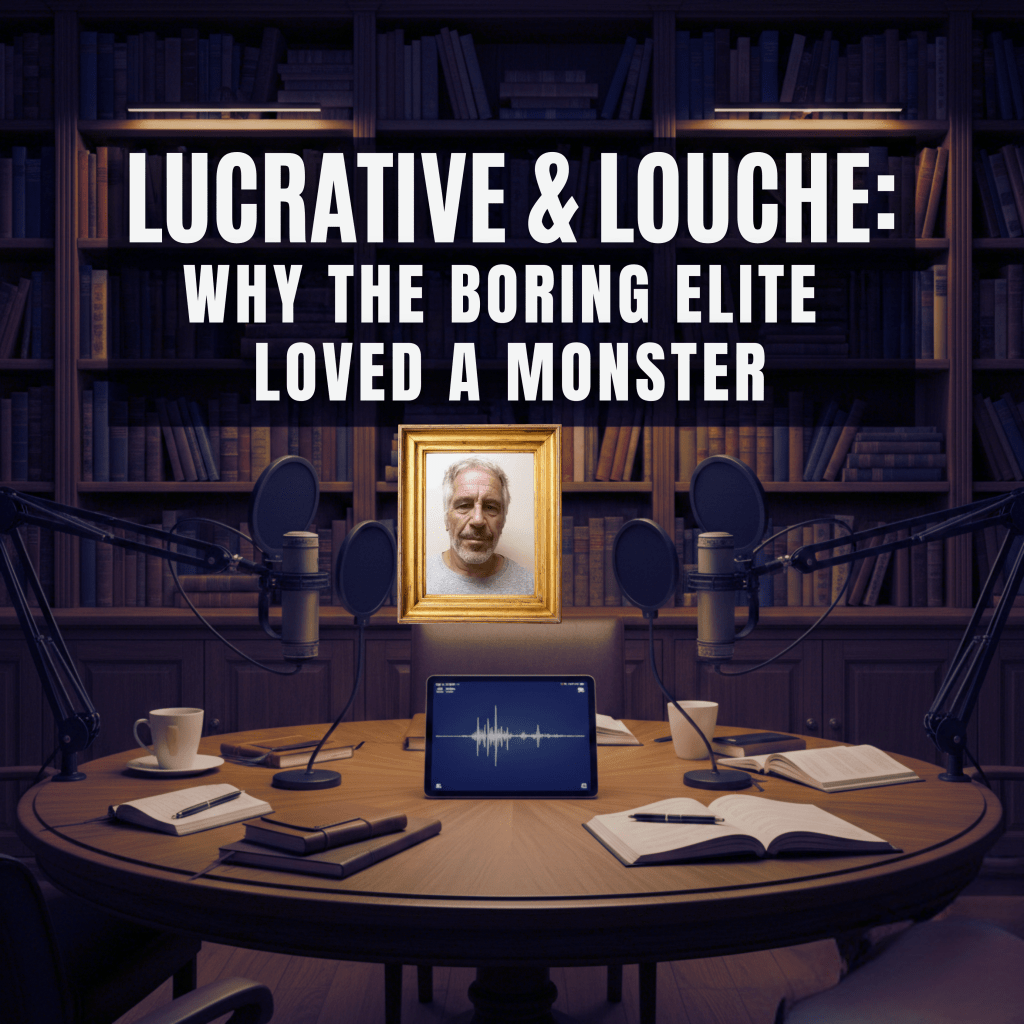
If you walked into Jeffrey Epstein’s Manhattan mansion in the early 2000s—the largest private home in the city—you weren’t just walking into a house. You were walking into a monument to impunity.
On the credenza, a fancy side table in the hallway, sat a row of framed photographs. These weren’t family snapshots. They were trophies. Epstein was grinning next to Bill Clinton. Next to Donald Trump. Next to Prince Andrew. Next to the world’s most famous scientists and Victoria’s Secret models. For a young woman walking into that house, perhaps an aspiring model from Eastern Europe lured by the promise of a visa, those photos sent a silent, terrifying message: This man is untouchable. If you speak, no one will believe you.
For years, the world’s most powerful people have relied on a single defense regarding their relationship with Epstein: “I didn’t know.” They claim they were tricked by a master manipulator, a Gatsby-like figure who hid his darkness behind a veil of philanthropy.
But the files tell a different story.
As Anand Giridharadas explains in The Ezra Klein Show, when you look at the evidence from as early as 2003—years before Epstein’s first conviction—you see a “cloud of common sense” hovering over his social circle. This is most visibly captured in the “Birthday Book,” a collection of handwritten notes from friends. These weren’t standard greetings; they were coded acknowledgments of a shared, illicit intimacy.
Donald Trump, years before he was President, wrote a message next to a drawing of a woman: “Enigmas never age. Have you noticed that?… May every day be another wonderful secret.”
“Enigmas never age.” “Wonderful secret.”
This isn’t a story about a con man who fooled the elite. It is an X-ray of the elite itself. To understand how Jeffrey Epstein operated, we have to peel back the layers of a society that decided money was a substitute for morality, and that connection was a substitute for character. We have to look at what Tina Brown, in The Daily Beast Podcast, calls the “Uber Race”—a class of people who have effectively left planet Earth, taking their own rules with them.
Layer 1: The mechanics of abuse
To understand the sophisticated machinery of Epstein’s world, we must first look at the foundation upon which it was built: the industrialized abuse of women and girls.
In The Daily podcast by The New York Times, reporters Nick Confessore and Deborah Acosta describe how Epstein created what they label a “Virtual Harem.” This wasn’t a chaotic series of assaults; it was a logistics operation. Epstein built a “pipeline” of young women, often scouting in Eastern Europe or Russia. He targeted those with “aspirations”—girls who wanted to be models, dentists, or designers but lacked the funds to get there.
He used his wealth not just to impress, but to entrap. He bought the plane tickets. He paid the rent. He promised to pay for schooling. And once they were dependent on him, the trap snapped shut.
The files reveal a psychological weapon Epstein used to maintain control, a tactic known in psychology as “DARVO” (Deny, Attack, and Reverse Victim and Offender). The Daily highlights emails where young women, realizing they were being used, would confront him. Instead of apologizing, Epstein would flip the script. He would write back portraying himself as the victim of their lies, claiming, “I am and I have been a friend… but you cannot lie to me.” He broke their reality before he broke them physically.
The dehumanization was absolute. Years after discarding these women, when they reached out for the help he had promised, his response was often a brutal, two-word command: “Send nudes.” If they complied, desperate for a lifeline, he would reply like a critic reviewing a product: “Not sexy enough.”
But a man like Epstein couldn’t operate this pipeline alone. He needed a bridge to the civilized world. He needed Ghislaine Maxwell.
In The Daily Beast Podcast, Tina Brown identifies Maxwell’s specific utility. She wasn’t a “seedy guy in a truck”; she was a woman with a “cut glass English accent.” That accent was a weapon. It signaled safety, class, and breeding. Brown describes how Maxwell would “vacuum” spaces like bars and high schools, approaching young girls with a “marvelous friend” they simply had to meet. Her presence disarmed the girls’ natural defenses (and those of their parents), masking the predator behind a veil of high-society benevolence.
Layer 2: The psychology of the bored elite
Why did they stay? Why did Larry Summers, a former Treasury Secretary and President of Harvard, email a sex offender for dating advice? Why did billionaires and princes flock to his townhouse?
The answer, according to Anand Giridharadas in The Ezra Klein Show, is that the American elite is suffering from a profound crisis of boredom.
Giridharadas applies the label “Lucrative and Louche” to explain this dynamic. He notes that many of the people who run the world—financiers, tech titans, academics—are actually “grinds.” They work 100-hour weeks. They eat kale. They are in bed by 8:30 PM. They spend their lives terrified of making a reputational error. They have the money (the lucrative), but they feel they missed out on the “cool” (the louche).
Epstein identified this insecurity with the precision of a surgeon. He offered these men a “Great Gatsby fantasy.” He was the “Bad Boy Friend” who broke the rules so they didn’t have to. He offered a life that felt dangerous, sexy, and “unleashed.”
But he offered something else, too: an “Amoral Space.”
In The Daily, reporters note how powerful men treated Epstein like a therapist. Because he was a criminal, because he operated outside the bounds of polite society, they felt they could tell him things they couldn’t tell their wives or PR teams.
- Deepak Chopra, the wellness guru, emailed Epstein to ask, “How can I be sure that I’m eternal?”
- Prince Andrew emailed to complain about the “restraints of royal life.”
They gravitated toward him because he provided a judgment-free zone for their egos and their ids. In a world where they were constantly watched and managed, Epstein’s house was the one place where they could take the mask off.
Layer 3: The market of legitimacy
If the previous layers explain the psychology, this layer explains the economics. How did a college dropout from Coney Island with no real investment track record fool the compliance departments of major banks?
He acted as a market maker. Giridharadas uses the label “Cross-Subsidization” to describe how Epstein traded different forms of capital to manufacture legitimacy.
The scheme worked like this:
- The Intellectuals: Academics at MIT and Harvard had intelligence and prestige, but they often lacked massive wealth and access to private jets. Epstein gave them money and the “lifestyle.”
- The Billionaires: The “money people” had cash, but often felt intellectually insecure. They wanted to feel smart.
Epstein created a marketplace—dinners, conferences, island weekends—where he brought these groups together. He used the scientists to impress the billionaires, and the billionaires to dazzle the scientists. As Giridharadas puts it, “The connections are power to the wealthy, but the wealth is power to the connections.”
By standing in the middle, Epstein cross-subsidized his own reputation. When JPMorgan Chase flagged over $1 billion in suspicious transactions—cash withdrawals clearly linked to his abuse network—the bank’s executives overruled their own compliance officers.
Why? Because of the “Network Proof.”
The Daily highlights a memo from Epstein’s banker, Justin Nelson, who argued that despite being a convicted sex offender, Epstein was “still clearly well respected and trusted by some of the richest people in the world.”
This is the circular logic that allowed him to survive. The bank looked at his client list—Bill Gates, the co-founder of Google, Les Wexner—and decided that if he knows them, he must be safe. And those famous men likely looked at the bank and thought, if JPMorgan handles his money, he must be legitimate.
It was a “mass network of legitimacy” where everyone looked at everyone else for permission to ignore the monster in the room.
Layer 4: A club of their own
You might be asking a question that seems obvious: In a room full of the world’s most educated people—University Presidents, Prime Ministers, legendary journalists—why didn’t anyone scream?
Someone did. But the silence that followed is even more telling than the scream itself.
In The Daily Beast Podcast, the legendary editor Tina Brown recounts a moment that perfectly captures the insulation of this class. She received a dinner invitation from PR executive Peggy Siegal. The proposed guest list was a who’s who of influence: Prince Andrew, Woody Allen, and Jeffrey Epstein. Brown didn’t just decline; she shouted across her newsroom: “What is this, the pedophiles ball?”
And yet, the party went on. The network didn’t eject Epstein; it absorbed the criticism and kept eating.
To understand this Teflon dynamic, we have to look at the label Tina Brown applies to this specific strata of wealth: “The Uber Race.”
Brown argues that the billionaire class has accumulated so much wealth—figures like Jeff Bezos north of $200 billion—that they have effectively “left planet Earth.” They have seceded from our shared reality and, more importantly, from our shared moral code. They have formed a “Club of Morals” (or lack thereof) where the only membership requirement is the size of your bank account.
In this club, protection is tribal. Brown compares it to the British upper class during the Cold War, who protected the Soviet spy Kim Philby for years simply because he was “one of them.” He went to the right schools; he spoke with the right accent. Today, that tribal loyalty is determined by “where does your yacht berth?”
This insulation breeds what Brown calls “Willful Incuriosity.”
The files expose this hypocrisy with brutal clarity. Take Howard Lutnick, the CEO of Cantor Fitzgerald (and a recent Commerce Secretary nominee). On a podcast, Lutnick performed what Brown calls an “Oscar performance,” claiming he was “revolted” by Epstein and refused to be in a room with him.
But the documents tell a different story. The Daily (The New York Times) reveals that years after Epstein was a convicted sex offender, Lutnick was emailing him, looking to set up a meeting because he happened to be “sailing past Little Saint James” with his family.
Think about that. A man publicly “revolted” by a predator privately asks to bring his family to that predator’s island because it was convenient for his yachting schedule.
They knew. They had Google. They read the stories. But as Brown notes, they decided that the “wealth, the lifestyle, the network” were simply more valuable than the “elephant in the room.” They didn’t want to be the “skunk at the garden party.” They chose the yacht over the truth.
Layer 5: The art of the implied threat
Epstein didn’t rely solely on the carrot of luxury; he was a master of the stick. But he didn’t use the stick like a thug. He used it like a spy.
In The Daily, New York Times reporters Matt Goldstein and Nick Confessore dismantle the myth that Epstein ran a simple blackmail operation with tapes and demands for cash. Instead, they use a term from Russian intelligence: “Kompromat.”
The power of Kompromat isn’t in the release of damaging information; it is in the possession of it. It is the “Implied Threat.” Epstein acted as a vault for the elite’s secrets, and he made sure they knew he had the key.
The files show Epstein reminding his benefactors of the dirt he held, usually when he felt his influence slipping.
- The “Gang Stuff”: In a letter to Les Wexner, the billionaire founder of Victoria’s Secret who effectively bankrolled Epstein’s rise, Epstein wrote a sentence that chills the blood: “Les we did gang stuff for 15 years… we don’t want Abigail [Wexner’s wife] to find out about it.”
- The Bill Gates Memo: Epstein wrote notes to himself regarding Bill Gates, cataloging “illicit” things he knew and adding a reminder: “we don’t want Melinda to know about these things.”
He wasn’t just a friend; he was a liability. And in the world of the elite, you keep your liabilities close.
This dynamic turned Epstein into a magnet for hypocrisy. In The Ezra Klein Show, Anand Giridharadas highlights a stunning exchange involving Steve Bannon, the populist firebrand. Bannon, who built a political movement destroying the “globalist” establishment, is found in the files asking Epstein—the ultimate globalist—for help getting a lawyer into an exclusive country club.
In the emails, Bannon refers to the white elites running the club as “crackers.”
Giridharadas points to this as the ultimate proof that the “diversity” of Epstein’s network—spanning from the far-left Noam Chomsky to the far-right Bannon—masked a “deeper solidarity.” In public, they fought culture wars for our entertainment. In private, they were “hanging out, breaking bread, colluding,” and trading favors. Epstein knew who they really were when the cameras were off. As long as he held that knowledge, he was safe.
Layer 6: ‘Disposable people’
We have been analyzing the men in the photos. But to truly understand the evil of the “Epstein Class,” we must look at who is missing from the frame: the victims.
To Epstein and his circle, the young women and girls he trafficked were not human beings. In the devastating conclusion of The Daily podcast, the reporters label them “Disposable People.”
They were “girls that didn’t matter.”
Virginia Giuffre, one of the most prominent survivors, wrote in her memoir that Epstein liked to tell his powerful friends that women were merely a “life support system for a vagina.”
This wasn’t just Epstein’s view; it was the product he sold. He marketed compliant, voiceless women to men who were tired of dealing with equals. Giuffre observed that many of the powerful men Epstein introduced her to were socially stunted. She wrote that it was as if their “big brains were missing the ability to interact with other people.”
These Masters of the Universe didn’t want partners; they wanted props. They wanted women who wouldn’t challenge them, wouldn’t ask about their day, and wouldn’t speak unless spoken to. Epstein provided a “virtual harem” of human beings stripped of their agency, and the elite bought, leased, and borrowed them without a second thought.
Conclusion: The ‘paucity of bravery’
So, where does this leave us?
It is comforting to look at Jeffrey Epstein as an anomaly—a singular monster who tricked the world. But the files do not support that comfort. Epstein was a mirror. He reflected the true nature of the people who run our world.
Anand Giridharadas, in his final analysis on The Ezra Klein Show, diagnoses the true sickness revealed by these files not as lust, but as a “Paucity of Bravery.”
We are suffering from a leadership class that is fundamentally cowardly.
- The Cowardice of Institutions: We are led by the grandsons and granddaughters of the generation that stormed Normandy. Yet, these modern elites—running law firms, universities, and banks—lack the courage to send an awkward email. They lack the courage to be the one person in the boardroom who says, “No.”
- The “Concentric Circles of Enablement”: Epstein proves that it takes a village to abuse a child on an industrial scale. It took JPMorgan Chase looking at $1 billion in suspicious withdrawals and deciding the fees were worth it. It took MIT inviting him to the Media Lab because he funded their research. It took a society that values the “Social Fact” of power over the evidence of crimes.
Epstein is gone, but the Epstein Class remains in charge. Kathy Ruemmler is still the top lawyer at Goldman Sachs. The billionaires are still sailing their yachts. The “club” is still in session.
When you see those photos of powerful men grinning next to a predator, do not be impressed by their reach. Be disgusted by their weakness. They had every tool to stop him—the laws, the money, the influence—and they chose not to. They chose the party instead of the truth.
The lesson of the Epstein files is not about one man’s evil. It is about the terrifying fragility of a world run by people who are too rich to care, and too afraid to act.
These insights were culled from these brilliant podcasts:
- “The Daily” (The New York Times): Deception and Dependency: Inside the Latest Epstein Files. (Discussing “Virtual Harem,” “Kompromat,” “Disposable People,” “DARVO”)
- “The Daily Beast Podcast”: How Evil Epstein Used Elites to Stifle the Truth. (Discussing “The Uber Race,” “The Club,” “Willful Incuriosity,” “Pedophiles Ball”)
- “The Ezra Klein Show”: What the Epstein Files Reveal About How Elite Worlds Work. (Discussing “Concentric Circles of Enablement,” “Paucity of Bravery,” “Cross-Subsidization,” “Lucrative and Louche”)
 Lala Rimando
Leave a comment