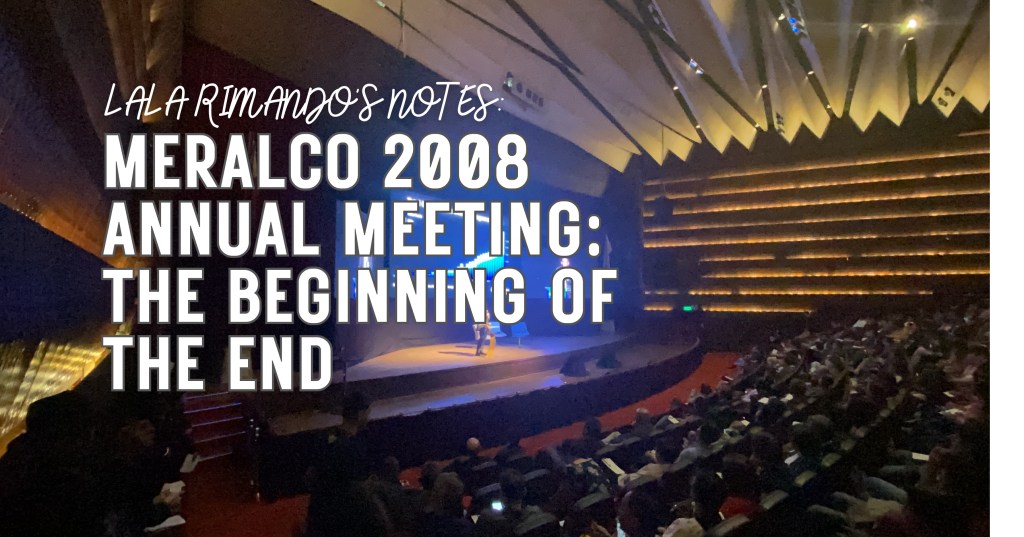
I spent almost 14 hours inside the Meralco Theater on May 27, 2008, notebook in hand, watching a stockholders’ meeting morph into a corporate siege. The country’s biggest power distributor was supposed to be ticking through a familiar script—minutes, auditors, dividends, board election. Instead, we got boos and chants, an SEC official trying to stop the vote, a government pension‑fund chief storming out to a mall across the street, and the first hints of a war that would end with the storied Lopez family selling its crown jewel.
How the stage was set: proxies, regulators, and politics
By early 2008, the Lopezes had spent years rebuilding their Meralco stake after martial law. In 2007, First Philippine Holdings (FPH) doubled its investment by buying out Spanish partner Union Fenosa and acquiring shares from the Meralco pension fund, raising the family’s holding to 33.4%. It was still the single biggest block, but it no longer guaranteed a safe majority.
Across the table sat government pension fund GSIS (Government Service Insurance System), led by president and general manager Winston Garcia, which had quietly accumulated around 27% of Meralco. Add the holdings of other state entities like SSS and Land Bank and government‑linked investors collectively came close to the Lopezes’ position. Whoever mastered the proxy votes of small shareholders would decide who ran the country’s largest power distributor.
On March 17, 2008, the Meralco board set May 27 as the date of the annual stockholders’ meeting and fixed May 17 as the deadline for proxies, with validation on May 22. After corporate secretary Camilo Quiason resigned, the board named Jose Vitug as replacement, but in practice it was assistant corporate secretary and in‑house counsel Anthony Rosete who would preside over proxy validation and the meeting itself—an arrangement GSIS would later question.
Garcia started framing the battle early in the press. “We are not taking control of Meralco. What we want is a change in management,” he told reporters, promising to “bring back social responsibility and good corporate governance at Meralco” and hinting that government was “ready and willing to take over” the utility if necessary. In parallel, then media giant ABS‑CBN, another Lopez flagship, was airing hard‑hitting stories on scandals around the Arroyo administration, from “Hello Garci” to NBN‑ZTE, keeping relations with Malacañang tense while Garcia, an Arroyo ally, trained GSIS’ fire on Meralco’s rates and contracts.
On May 22, Rosete chaired the proxy‑validation meeting. In later pleadings, GSIS alleged that proxies favoring the Lopez slate were liberally validated while many of its own were rejected on technical grounds, setting up Garcia’s claim that Meralco intended to “railroad” the meeting. GSIS first filed a case in the Pasay Regional Trial Court to nullify the questioned proxies and stop their use, then withdrew it and, on May 26, went to the Securities and Exchange Commission (SEC) for faster relief.
That same day, the SEC issued a cease‑and‑desist order (CDO), signed by Commissioner Jesus Martinez and implemented through Compliance and Enforcement Department director Hubert Guevara. The order restrained Meralco from “counting, validating and canvassing” the disputed proxies at the May 27 meeting and raised the possibility of the SEC directly supervising the proceedings. It was an extraordinary move: a securities regulator stepping into the middle of a proxy fight between a politically exposed family and a powerful state pension fund.
Walking into a charged theater
On May 27, I joined the long lines outside the Meralco compound. GMA News later reported that security was tight: police units, bomb‑sniffing dogs and Meralco guards screened everyone entering the compound. The company had bused in employees from different service areas; many wore bright green shirts that turned the Meralco Theater into a sea of color. Some clutched small placards defending the family. Others just wanted to see what would happen.
Inside, the theater filled quickly. Roughly 86% of Meralco’s outstanding shares were represented, far above the usual turnout for annual meetings. On stage sat Manuel “Manolo” Lopez, Meralco chairman and CEO, flanked by directors that included Lopez insiders and independents. In other rows, GSIS’ Winston Garcia and his lawyers took their seats.
The mood was electric even before the microphones were turned on. When Garcia’s face flashed on the big screen, the hall erupted in boos and jeers; employees countered with chants of “Lopez! Lopez!” that went on long enough for TV crews to capture them. When Manolo delivered his opening remarks, stressing Meralco’s role in keeping Luzon powered and defending its record on investments and service, the applause was long and loud.
What made the scene more surreal was that, just days earlier, Lopez patriarch Oscar M. Lopez had already addressed accusations of self‑dealing and mismanagement in another venue. At the FPH stockholders’ meeting on May 19, he walked shareholders through “Attack Number One” and “Attack Number Two”: allegations that group companies like Philippine Electric Corporation (Philec) and First Gas were abusing their links to Meralco. He argued that Philec won Meralco transformer contracts through competitive bidding and that First Gas, which ran the Santa Rita and San Lorenzo plants, had waived capacity charges for years when Meralco could not fully dispatch the contracted power. “Its sole reward is the truth,” he said, warning that critics were using Meralco as a political punching bag and insisting that the group would survive this hostility as it had survived martial law.
When the SEC walked in
Everyone knew the SEC had issued a CDO; the question was whether it would be enforced. The answer arrived mid‑morning, when SEC director Hubert Guevara walked down the aisle with the order in hand.
Guevara tried to read the CDO into the record and serve it on stage, effectively ordering the meeting to stop counting and using the disputed proxies. Meralco’s lawyers—and Rosete as acting corporate secretary—pushed back. They argued that after changes in securities and corporation laws, the SEC no longer had original jurisdiction over intra‑corporate proxy disputes, and that its attempt to stop a duly called meeting was void. Rosete told the shareholders that the CDO was “null and void,” and the meeting would proceed.
From the gallery, I could feel the hall’s temperature rise. Every time Garcia rose to speak or raise a point of order, there would be an ear‑splitting squeal of feedback or the microphone would simply cut off; GSIS supporters muttered that the sound system failed only when their side had the floor. Simultaneously, mobile‑phone signals were almost non‑existent inside the theater. GMA News reporters later recalled having to step outside the building just to send updates; GSIS aides whispered about deliberate “signal jamming,” while Meralco officials blamed the theater’s thick concrete walls. Whether by design or by accident, the combination of dead microphones and dead signal made it far harder for Garcia to coordinate with his lawyers and for journalists to relay his side of the story from inside the room.
The Galleria walk‑out
At some point after lunch, Garcia decided to change the battlefield. Under a hail of boos, he stood up and walked out of the Meralco Theater with his staff. A few minutes later, he reappeared—in front of cameras—in the atrium of Robinsons Galleria, the mall across the street where phones and live feeds still worked.
“I ask this bogus meeting be stopped and let the SEC supervise this meeting,” he told reporters, calling the proceedings inside invalid because they defied a lawful order. He vowed to ask the SEC to void the election of the 11‑member Meralco board and promised that once a new management was in place, electricity rates would go down “at least to the level the rest of the country is paying right now.”
“I see the light at the end of the tunnel because I firmly believe whatever Meralco has accomplished this morning will not last long,” he said. “Truth and justice is on our side.” It was classic Garcia: combative, quotable, and very aware of the cameras. For TV viewers who never set foot in the theater, this Galleria press conference became the day’s defining image.
The ‘green army’ holds the fort
Inside, the meeting dragged on. The “green army” of Meralco employees remained in their seats, clapping when directors defended management and booing whenever anyone mentioned GSIS’ accusations. One GMA News report noted that when Garcia arrived earlier that morning, he was greeted by “boos, jeers, and pro‑Lopez chants,” and that even outside the theater, employees were chanting “Lopez! Lopez!” as he passed.
Management emphasised investments in distribution lines, transformer upgrades, and lower systems loss, while insisting that many of the costs Garcia called “overcharging” were driven by fuel prices and Napocor supply contracts. Off‑stage, GSIS’ separate briefings hammered on alleged overbuying from Lopez‑linked suppliers like Philec and on the long‑term gas supply contracts with First Gas, arguing that Meralco’s rates were higher than those paid by customers in other parts of the country.
Meanwhile, Rosete continued to adjudicate proxy issues. In later case summaries, the Supreme Court would list the Lopez‑aligned directors whose seats depended on those proxies—names like Christian Monsod, Elpidio Ibáñez, and Francis Giles Puno—and note that GSIS’ legal strategy at the SEC and courts was aimed squarely at invalidating those votes.
By early evening, after hours of procedural debates and speeches, the meeting finally reached the board election. When the tally was read, it was clear the Lopez slate had kept enough seats to retain control. GMA’s banner story that night said it succinctly: “Lopez family retains control of Meralco after 13‑hour meeting.” PhilStar’s headline the next day: “No management change at Meralco.” On the surface, the Lopezes had won.
From Ortigas to the Court of Appeals and beyond
The day after the meeting, the battle shifted to Manila’s courts. On May 28, the SEC issued a Show Cause Order asking Meralco officials to explain within five days why they should not be cited for contempt for defying the CDO. In response, Meralco filed CA‑G.R. SP No. 103692 with the Court of Appeals on May 29, asking the CA to declare the SEC orders void and to restrain the commission from further action.
What followed was the now‑famous GSIS vs. Court of Appeals saga: the reassignment of the case between Justices Bienvenido Reyes, Vicente Roxas, Myrna Vidal, Jose Sabio Jr., and others; a 60‑day TRO issued on May 30; disputed oral arguments in June; and eventually a July 23, 2008 CA decision voiding the SEC’s CDO and Show Cause Order for lack of jurisdiction. The Supreme Court would later discipline several CA justices over their handling of the case in A.M. No. 08‑8‑11‑CA, while referring conflicting bribery allegations between Justice Sabio and businessman Francis de Borja to prosecutors.
I picked up the story from that point in “The inside story: How San Miguel worked its way into Meralco’s board.” There I reconstructed how, after failing to win via proxies and regulators, GSIS turned its 27% block into a tempting prize for tycoons. Based on interviews with people familiar with the negotiations, I reported that Manuel V. Pangilinan had earlier lined up a deal—with government contacts—for PLDT/Metro Pacific to buy the GSIS stake at around ₱90 per share, on a cash basis, subject to due diligence and a management overhaul.
That plan changed when Ramon Ang went to Cebu one weekend to meet Garcia. As I wrote in that exclusive report (“The inside story…“, Ang matched the ₱90 share price, offered staggered payments, and crucially did not insist on immediate management changes—packaging his offer as less threatening to the incumbent management even as it dramatically expanded San Miguel’s footprint in power. When San Miguel announced in October 2008 that it was buying the GSIS stake, the business community was shocked. The Lopezes, I noted, had expected to be working with MVP, not with a beer‑and‑food conglomerate pivoting into energy.
In “Lopez family: Sale of Meralco stake ‘a business decision’,” I then chronicled the family’s response: the March 13, 2009 FPH board meeting where they agreed to sell 20% of their Meralco holdings to PLDT affiliate Piltel and Metro Pacific for about ₱20 billion. In that piece, Oscar Lopez admitted that while the decision was reached after months of discussion and he viewed it as part of a broader strategy to strengthen the group’s balance sheet, “acceptance of this sale was not easy, most especially by my brother Manolo, who has invested more than 30 years of his life with the company.” He stressed that the family had to consider not only Meralco, but also debt‑laden First Holdings, newly acquired EDC, and an increasingly embattled ABS‑CBN.
Seen from that later vantage point, the 13‑hour stockholders’ meeting in May 2008 looks less like a final victory than like a hinge in the story. The Lopezes kept the board, but the war with GSIS showed them three hard truths:
- that a 33.4% block was vulnerable when a government fund with almost as many shares turned hostile;
- that regulators like the SEC could be pulled into the fray; and
- that fighting on too many fronts—Meralco, ABS‑CBN, FPH’s debt—was unsustainable.
What stayed with me
As a business journalist in that hall, what stayed with me were not just the legal citations but the sensory details: the roar of boos when Garcia walked in; the way the “Lopez! Lopez!” chants rolled down from the balcony; the moment the SEC official climbed onto the stage and was told, politely but firmly, that his order would not be obeyed; the frustration of watching colleagues run outside just to send one paragraph to their desks because nothing would transmit inside.
Later, when the family finally sold down to 13% and then to a residual 3.95%, I captured the emotional cost in your 2009 piece—the “painful and difficult” decision, the internal rifts, the recognition that Meralco’s history had been “long intertwined” with the Lopez name and that letting go would feel like losing a part of the family’s identity.
But that process started in earnest on a day when nothing seemed to work as expected—not the sound system, not the phone signal, not even the line between regulator and company. The 2008 Meralco annual stockholders’ meeting was where we saw, compressed into 13 chaotic hours, how corporate control in the Philippines is decided not only by how many shares a family owns, but by who can marshal proxies, regulators, courts, employees, and public opinion—and who is willing, like Garcia walking to Galleria or Oscar signing a sale resolution, to make the next risky move when the room turns hostile.
 Lala Rimando
Leave a comment